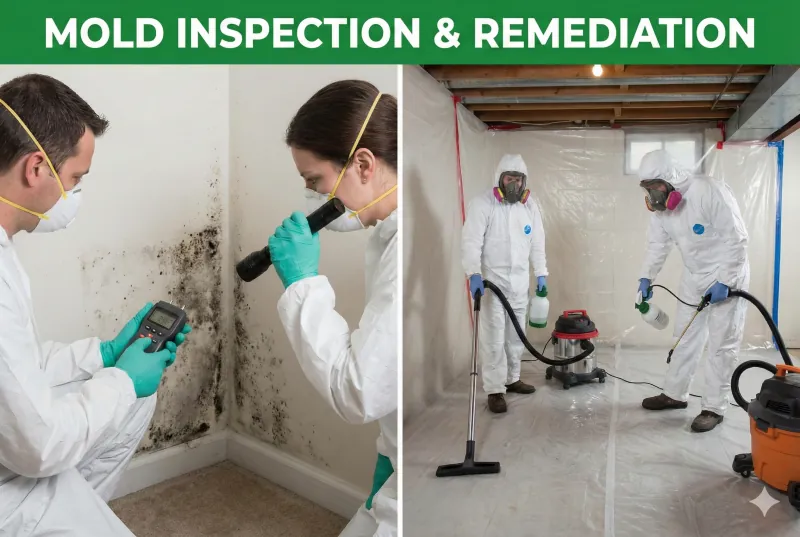
Mold Remediation for Houston Homes & Businesses
Mold remediation means finding the moisture that is feeding mold, containing the affected area, removing or cleaning the contaminated materials, and drying the space so the mold doesn't come back. In Houston, where humidity stays high for most of the year, mold usually follows a leak, a flood or an AC problem. Saved Restoration handles mold remediation for Houston homes and commercial properties and fixes the water problem behind it. Call (346) 436-1306 to talk it through.
Mold growth can begin within 24–48 hours after moisture appears and can spread quickly through walls, flooring, and HVAC systems. Left untreated, mold can cause serious health issues, respiratory problems, and long-term damage to your property. Our certified mold inspection and remediation service helps identify the source, remove contamination, and restore a clean indoor environment.
Saved Restoration provides mold remediation in Houston, TX, where heat and humidity make mold a common problem after any leak. Most mold starts with moisture, so we often pair mold work with water damage restoration and help homeowners and property managers fix the source.
We follow industry-approved, safe removal practices to thoroughly eliminate mold and prevent it from returning. From small isolated spots to widespread contamination, our experts use advanced detection tools and remediation techniques to protect both your health and property.
What We Do
- Comprehensive mold inspection and air quality assessment
- Moisture detection and source identification
- Containment of affected areas to prevent spreading
- Safe removal of mold from surfaces and materials
- HEPA vacuuming and filtration of airborne spores
- Deep cleaning, sanitization, and disinfection
- Air purification and odor removal treatment
- Recommendations and repairs to prevent future growth
Key Benefits
- Safe & approved removal processes: Our trained professionals follow certified remediation protocols to safely eliminate mold and handle contaminated materials without risking further exposure.
- Air purification & odor control: We use advanced air filtration systems that trap mold spores and neutralize musty odors, improving indoor air quality for your family or workplace.
- Prevents re-growth & contamination: We address the root cause of moisture, thoroughly dry affected areas, and treat surfaces to stop mold from reappearing or spreading elsewhere.
If you see signs of mold or notice musty odors, don’t wait. Our mold inspection and remediation services provide fast, reliable solutions to restore a safe and healthy environment.
Why Mold Is So Common in Houston
Mold needs three things: moisture, something to feed on, and warmth. Houston supplies two of those all year. Drywall paper, wood framing, carpet backing and dust are all food for mold, so the missing piece is almost always water. The most common causes we see are:
- Leaks that weren't fully dried, especially under sinks, behind dishwashers and around toilets.
- AC systems that sweat or drip: condensate lines, drain pans, and supply vents in humid attics.
- Roof leaks and wind-driven rain after storms.
- Floodwater, where wet drywall and insulation were left in place too long.
- Poor ventilation in bathrooms, laundry rooms and closets on exterior walls.
Cleaning visible mold without fixing the moisture source almost always means it comes back. That's why our mold work starts with the water, and often overlaps with our water damage restoration service.
Signs You May Have a Mold Problem
- A musty, earthy smell that gets stronger when the AC runs or a closet is opened.
- Spotting or staining on drywall, ceilings, baseboards or grout that returns after cleaning.
- Discoloration around AC vents, or on the back of furniture pushed against an outside wall.
- A past leak or flood in the same area that was never professionally dried.
- Allergy-type symptoms that seem to improve when you're away from the building.
If you see more than a small patch, avoid scrubbing or disturbing it. Dry brushing and household fans can spread spores into other rooms.
How Mold Licensing Works in Texas
Texas regulates mold work more closely than many states. The program is run by the Texas Department of Licensing and Regulation (TDLR) Mold Assessors and Remediators program. In general terms, here is how it works:
- Assessment and remediation are separate licensed jobs. A licensed mold assessor inspects the property and writes a mold remediation protocol: what needs to be removed, how the area must be contained, and what "clean" looks like. A licensed remediation contractor or company then does the work.
- The same company can't do both on one project. Texas rules are designed to keep the person who decides the scope independent from the person who gets paid to do it.
- Size matters. The licensing rules generally apply to projects involving 25 contiguous square feet or more of visible mold. Smaller areas have fewer requirements, but they still need the moisture source fixed.
- Notice and clearance. For regulated projects, the remediator generally notifies TDLR before starting, and the assessor checks the work afterward. When the area passes, the property owner can receive a Certificate of Mold Damage Remediation, which is useful if you ever sell the property or file an insurance claim.
Some exemptions apply, for example to some homeowners working on their own homes. You can check any company's or individual's license with the TDLR license search, and we encourage you to do that with anyone you hire, including us.
Our Mold Remediation Process
- Talk it through and look. We ask about the history of the area, look at the visible growth, and use moisture meters to find what is still wet.
- Assessment and protocol. For larger projects, a licensed mold assessor documents the problem and writes the remediation protocol, following the Texas rules above.
- Containment. The work area is sealed off with plastic sheeting and kept under negative air pressure with HEPA-filtered equipment, so spores don't travel into the rest of the building.
- Removal and cleaning. Porous materials with mold growth, like drywall, insulation and carpet pad, are bagged and removed. Framing and other solid surfaces are cleaned and HEPA-vacuumed.
- Drying and fixing the source. The area is dried, and the leak, drain or ventilation problem that caused the mold is corrected or referred to the right trade.
- Clearance and rebuild. After the area passes clearance, we put the walls, flooring and finishes back.
What Mold Remediation Costs
Mold jobs are priced after an inspection. The cost depends mostly on:
- How large the affected area is, and whether it crosses the 25-square-foot threshold that brings in the Texas licensing steps.
- Where the mold is. Open drywall is simpler than an attic, a crawlspace, inside an HVAC system or behind cabinets.
- How much material has to come out and be rebuilt afterward.
- The containment needed to protect the rest of the building, especially if people are living or working there.
- Assessment and clearance testing by a licensed assessor, which is a separate service on regulated projects.
- Whether a water problem still needs to be fixed before remediation can start.
You'll have a written scope before work starts.
Does Insurance Cover Mold?
Coverage for mold varies a lot between policies, and many homeowners policies limit or exclude it. Mold that results from a sudden, covered water event is more likely to be considered than mold from a long-term leak or humidity. Your insurance company makes that decision. We can give you documentation, photos and moisture readings to share with them. The EPA's guide to mold, moisture and your home is a good, plain-language place to learn more.
Mold Remediation FAQs
Can I clean mold myself?
Small spots on hard surfaces, like a few square feet on a bathroom ceiling, can often be cleaned by a homeowner with gloves, eye protection and good ventilation. Larger areas, mold inside walls or HVAC systems, or mold after sewage or floodwater should be handled by professionals.
Does bleach kill mold?
Bleach can lighten mold on hard, non-porous surfaces, but it doesn't fix mold growing into drywall or wood, and it does nothing about the moisture causing it. Never mix bleach with ammonia or other cleaners.
Do I need a mold test?
If you can see mold and know where the moisture came from, testing often isn't needed to start fixing it. Testing and assessment become important for larger projects, unexplained odors, health concerns, and clearance after remediation, which in Texas is done by a licensed assessor.
Why can't the same company inspect and remove the mold?
Texas rules keep assessment and remediation separate on the same project so the scope is set by someone who isn't paid to do the removal. It protects property owners from paying for more work than they need.
How long does mold remediation take?
Small, contained jobs can take a day or two. Larger projects with assessment, containment, removal, drying and clearance can take a week or more before rebuilding starts.
Will mold come back after remediation?
Not if the moisture problem is fixed and the area is dried properly. Mold returns when the leak, drainage or humidity issue behind it is still there.
Is it safe to stay in the house during mold removal?
For contained jobs, often yes, because containment and HEPA filtration keep the work area separate. People with asthma, allergies or weakened immune systems may want to stay elsewhere during removal.
Concerned about mold in a Houston property? Request a free estimate or call (346) 436-1306. To learn more, read the EPA’s guide to mold, moisture and your home.
