Flood Cleanup for Houston Homes & Businesses
Flood cleanup in Houston means safely removing floodwater and everything it ruined, drying the structure, and preventing mold, while documenting the loss for a flood insurance claim. Floodwater is not like a burst pipe: it carries sewage, chemicals and debris, so more has to come out of the house. Saved Restoration handles flood cleanup for Houston homes and businesses. Call (346) 436-1306.
Floodwater Is Contaminated: Stay Safe First
Water that comes in from streets, bayous and overflowing drainage is treated as Category 3, or "black," water. It can contain sewage, bacteria, fuel, pesticides and sharp debris. Before anyone starts cleaning:
- Wait until it's safe to go back. Follow local officials. Don't drive or walk through moving water.
- Assume the electricity is dangerous. Don't enter standing water if the power is on. Have an electrician check the system if water reached outlets or the panel.
- Watch for gas leaks. If you smell gas, leave and call the gas company from outside.
- Wear protection. Rubber boots, waterproof gloves, eye protection and an N95 mask at minimum. Wash hands and any skin that touches floodwater.
- Keep children and pets out of flooded rooms and away from floodwater outside.
- Check the structure. Look for cracked foundations, sagging ceilings and buckled floors before going in.
What Flood Cleanup Involves
- Document everything with photos and video before anything is removed, including the water line on the walls.
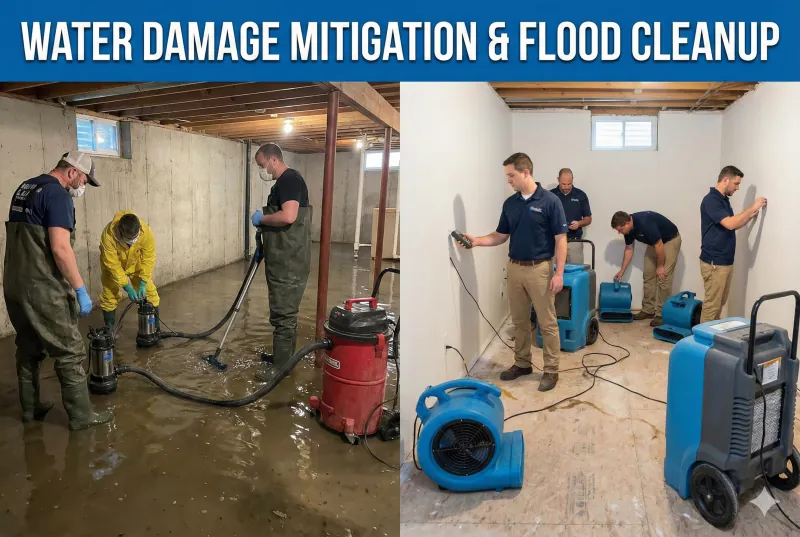
- Remove the water and mud. Standing water is pumped and extracted, and silt is shoveled and cleaned from floors.
- Remove ruined materials. Carpet, pad, insulation and the lower part of drywall that touched floodwater are removed. Porous materials soaked by Category 3 water generally can't be cleaned well enough to keep.
- Flood cuts. Drywall is cut out in a straight line a set distance above the highest water mark, so the wall cavity and framing behind it can be cleaned and dried.
- Clean and disinfect framing, slab, studs and any surfaces that will stay.
- Dry the structure with air movers and dehumidifiers, checking moisture readings until framing and slab are dry.
- Rebuild insulation, drywall, cabinets, flooring and trim once everything tests dry.
The drying and rebuild stages follow the same process as our water damage restoration service.
Why Flood Cuts Matter
After a flood, it's tempting to dry the drywall and paint over the stain. The problem is what you can't see: wet insulation, contaminated wall cavities and framing that stays damp behind the board. Those are the places mold starts weeks later. Cutting the drywall above the water line opens the wall so the cavity can be cleaned, treated and dried, and so you and your adjuster can see what's inside. It looks dramatic, but it usually makes for a cleaner, faster recovery than trying to save wet walls.
Stopping Mold After a Flood
In Houston's heat, mold can start growing on wet materials within a day or two. The best mold prevention after a flood is fast removal of wet porous materials, thorough cleaning, and drying that is measured rather than guessed. If mold has already started, our mold remediation page explains how it's handled, including the Texas licensing rules for larger areas.
Flood Insurance Claims: What to Know
Standard homeowners policies usually don't cover damage from rising floodwater. Flood damage is normally covered by a separate flood policy, most often through the National Flood Insurance Program (NFIP). If you have flood insurance:
- Report the loss quickly to your flood insurance company or agent and write down your claim number.
- Photograph before you throw anything out, including the water line, damaged belongings, appliances and building materials.
- Keep samples of carpet, flooring and drywall when you can, as your adjuster may ask to see them.
- Make a list of damaged items with approximate age and value. Keep receipts for cleanup supplies and temporary repairs.
- Watch the deadlines. Flood policies have time limits for submitting a signed proof of loss, commonly 60 days from the date of loss. Check your policy and ask your adjuster.
FloodSmart, the NFIP's official site, explains how to start a flood insurance claim and has a claims checklist. We document the damage with photos, moisture readings and a written scope you can share with your adjuster. You stay in control of your claim, and your insurance company makes the coverage decisions.
Flooding in Houston
Houston is flat, built on clay soils, and laced with bayous, which is why heavy rain can flood neighborhoods that are nowhere near the coast. Storms like the Tax Day floods of 2016, Hurricane Harvey in 2017 and Tropical Storm Imelda in 2019 flooded homes that had never taken water before. Before the next storm, check your home's flood risk and watch rainfall and bayou levels through the Harris County Flood Control District.
What Flood Cleanup Costs
Flood cleanup is priced after an inspection. The cost depends on how high the water rose, how many rooms and floors were affected, how long the water stood, how much drywall, insulation, flooring and cabinetry must be removed, the amount of mud and debris, and how much rebuilding follows. You get a written scope before rebuild work starts.
Flood Cleanup FAQs
Is floodwater dangerous to clean up myself?
It can be. Floodwater often carries sewage and chemicals, and wet electrical systems are a serious hazard. If you do any cleanup, wear boots, gloves, eye protection and a mask, and keep children and pets away.
Does homeowners insurance cover flood damage?
Usually not. Damage from rising water is typically covered only by a separate flood insurance policy, such as one through the NFIP. Water that comes through a storm-damaged roof may be handled differently, so check with your insurance company.
Can flooded carpet or drywall be saved?
Carpet, pad and drywall soaked by floodwater generally can't be cleaned well enough to keep, because floodwater is contaminated. Solid wood, framing and some hard surfaces can usually be cleaned, disinfected and dried.
How high do you cut drywall after a flood?
The cut is made a set distance above the highest water line, so all of the wet and contaminated material comes out. The exact height depends on how high the water rose and how far it wicked up the wall.
Should I throw everything out before the adjuster comes?
Not before you've photographed it. Remove wet items for health and safety, but take photos and video first, keep samples where you can, and list what was discarded.
How long does flood cleanup take?
Removal and drying commonly take several days to a week for a typical home. Rebuilding takes longer and depends on materials, crews and insurance approvals, which can stretch out after a widespread flood.
Need flood cleanup in Houston? Request a free estimate or call (346) 436-1306.
